
English| EUR
Suggested for you
More currencies
Choose a language
Belgium's food culture centers on precision craftsmanship and centuries-old technique. This guide identifies the essential Belgian specialties, explains what makes each iconic, and shows you where to experience them authentically in Brussels.
Quick answer
Belgium is known for chocolate pralines, Liège and Brussels waffles, moules-frites (mussels with fries), Belgian frites served in paper cones, speculoos biscuits, carbonnade flamande (beef stew), and over 1,500 beer varieties including Trappist ales. The country's culinary identity stems from medieval guild traditions, French technique, and Flemish resourcefulness. Most specialties originated between the 1400s and early 1900s.
Belgium produces 220,000 tons of chocolate annually, yet its reputation rests not on volume but on the invention of the filled praline in 1912 by Jean Neuhaus in Brussels. That single innovation—a chocolate shell encasing ganache, cream, or liqueur—established the Belgian standard of balancing texture, snap, and filling. Belgian frites deserve their own taxonomy. What food is Belgium known for more universally than double-fried potatoes, cut thick and served in paper cones with mayo or andalouse sauce? The technique appeared in Walloon valleys during the 1600s, where families fried fish in animal fat; when rivers froze, they switched to potatoes. The double-fry method—once at 160°C to cook through, once at 180°C to crisp—produces the signature contrast of crunchy exterior and fluffy interior. Friteries across Brussels still follow this protocol, often using beef tallow instead of oil. Waffles split into two lineages. Liège waffles, dense and caramelized with pearl sugar, came from an 18th-century prince's chef. Brussels waffles, rectangular and lighter, were formalized in the 1850s and gained global recognition at the 1958 World's Fair. The sugar crystals in a Liège waffle don't dissolve during baking—they melt into pockets of crunch. Moules-frites became the national dish through geography and economy. Belgium's North Sea coastline supplied mussels year-round; pairing them with frites turned two inexpensive ingredients into a complete meal. Traditional preparation uses white wine, celery, onion, and parsley. Restaurants in the Îlot Sacré neighborhood near Grand-Place serve them by the kilogram in black enamel pots, still steaming. Belgian beer culture operates under monastic discipline. Six Trappist breweries—Chimay, Orval, Westmalle, Rochefort, Westvleteren, Achel—produce ales inside abbey walls according to centuries-old recipes. Secular breweries like Cantillon keep spontaneous fermentation alive, letting wild yeast from the Senne Valley inoculate wort in open vessels. The result is lambic, a sour wheat beer that takes three years to mature in oak barrels. What food is Belgium known for pairs with these beers: carbonnade flamande, a beef stew braised in dark ale, or waterzooi, a cream-based chicken or fish stew from Ghent.
“The double-fry method—once at 160°C to cook through, once at 180°C to crisp—produces the signature contrast of crunchy exterior and fluffy interior.”
Belgian culinary identity is rooted in high-quality craftsmanship, characterized by four pillars that have achieved global recognition. These staples represent a blend of historical technique and local ingredient appreciation.
Belgium maintains a rigorous quality standard for its chocolate, requiring a minimum of 35 percent pure cocoa in the final product. This focus on purity distinguishes Belgian pralines, which were first invented in Brussels in 1912 by Jean Neuhaus.
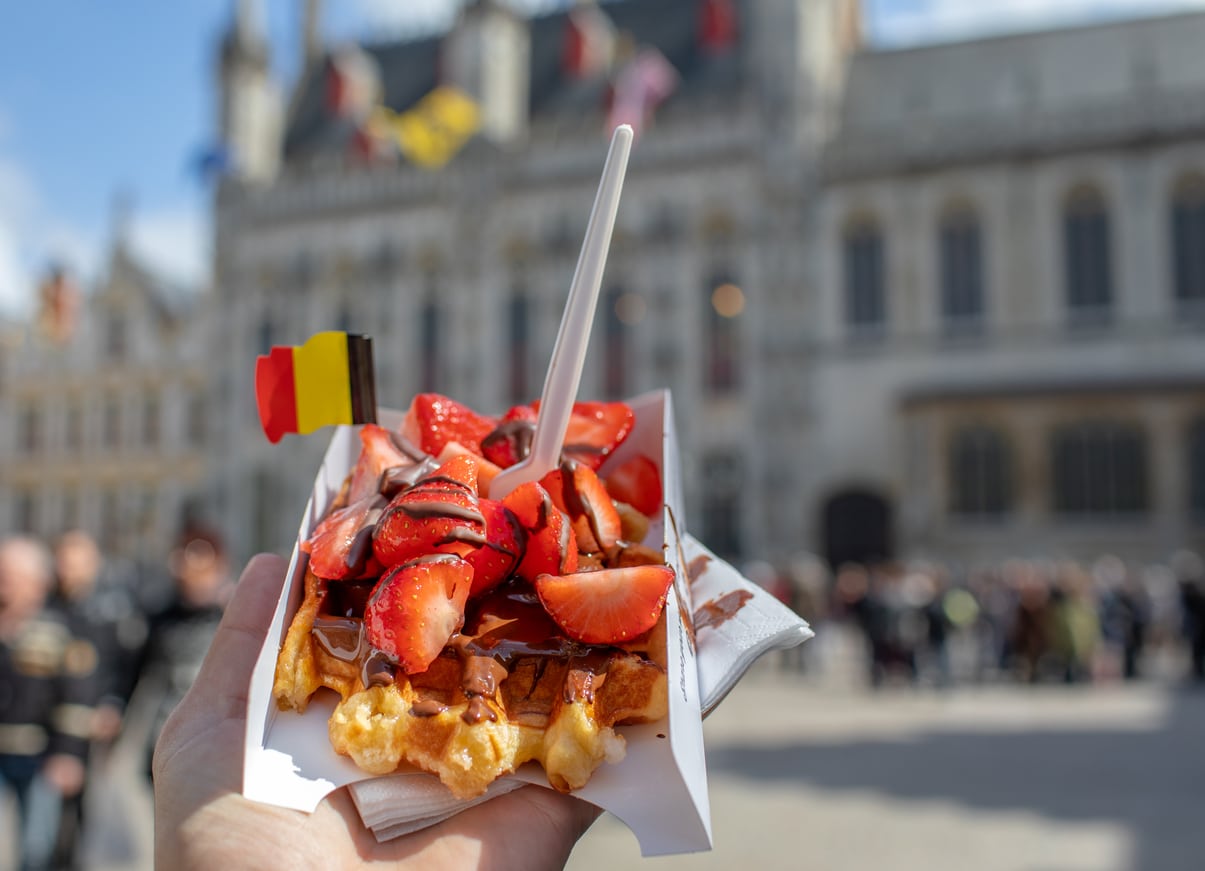
Visitors encounter the Brussels waffle, which is rectangular and light, and the Liège waffle, which is rounded with caramelized sugar edges. Both varieties are staples of street food culture and are prepared using distinct leavening methods.
Belgian frites are traditionally fried twice in beef tallow to achieve a crispy exterior and a soft, fluffy interior. This method is considered essential to the traditional preparation served in local fritures.
Belgian brewing history is tied to Trappist monasteries and local artisanal production methods, resulting in a diverse range of styles. The country's beer culture was recognized by UNESCO as an Intangible Cultural Heritage of Humanity in 2016.
The combination of steamed mussels and fried potatoes has become the representative national meal of Belgium. This pairing relies on fresh North Sea mussels, traditionally served in a metal pot with a variety of seasoning options.
Visitors exploring the area around Rue de l'Etuve 41 will find a high density of establishments serving classic Belgian specialties. Options range from dedicated chocolate houses on the same block to traditional brasseries located within a short walking distance in the city center.
café
Located directly at Rue de l'Etuve 41, this venue provides guided chocolate tastings as part of the visitor experience.
street
Situated just steps from the museum, this stall is known for traditional Brussels waffles served with various toppings.
restaurant
Located a ten-minute walk north of the museum, this restaurant specializes in hearty Belgian stews and carbonnade flamande in a rustic setting.
market
This area, reachable by a short walk, hosts various fish restaurants and markets offering fresh North Sea seafood specialties.
The Choco-Story museum is open daily to provide insight into Belgian culinary traditions. Guests are encouraged to plan their visit within the recommended window of 10:00–16:00 to avoid peak afternoon crowds.
Everything you need to know about what food is belgium known for
When asking what food is Belgium known for, travelers quickly discover that Brussels is world-famous for its pralines, waffles, fries, and artisanal beer. These staples define the local palate and are central to any exploration of the city.
To gain a deeper understanding of what food is Belgium known for, many visitors opt for a professional Brussels food tour. These guided experiences provide context on brewing techniques and confectionery history that you might miss on your own.
The entrance fee for Choco-Story Brussels is 14 EUR for adults, which includes an informative audio guide and a tasting session. This fee covers the core exhibition space detailing the history of cocoa processing.
For those researching what food is Belgium known for, the best arrival window is between 10:00 and 16:00 to avoid peak afternoon crowds. Arriving early ensures you have enough time to enjoy the exhibits and tastings without rushing.
Belgian chocolate is a cornerstone of the national identity and is frequently cited when discussing what food is Belgium known for. Artisanal shops across the capital showcase generations of expertise in tempering and flavor infusion.
When planning your itinerary around Belgian gastronomy, keep in mind that many specialized sites are open daily from 10:00 to 18:00. Checking specific logistics ahead of time helps you maximize your day in the historic center.
Most food-related museums and workshops are family-friendly, often providing interactive displays or simplified tastings. Reviewing the specific details for your chosen location ensures a smooth experience for guests of all ages.